Smart Money
What the people and firms required to publish their investing actually filed, read from the reports themselves, with every row linking to the original document. Members of Congress file the trades they made. Investment managers file what they held on one day of the quarter. Neither can be derived from the other, so the two are kept apart throughout.
- Filers
- 199
- Transactions
- 13,476
- Reports read
- 1,049
- Latest disclosure
- Sep 14, 2026
180 in Congress, 9 firms, 10 insiders
disclosed to Congress
147 could not be read
Filers
A hand-picked list, spread across both chambers and both parties. Being on it is not a ranking and says nothing about anyone's results: everybody here files because the law requires it.
- Nancy PelosiRep. · CA-11 · DemocratTransactions38Reports filed6Last disclosedAug 21, 2026
- Marjorie Taylor GreeneRep. · GA-14Transactions288Reports filed25Last disclosedDec 16, 2025
- Thomas H TubervilleSenator · AL · RepublicanTransactions222Reports filed14Last disclosedAug 5, 2026
- Josh GottheimerRep. · NJ-05 · DemocratTransactions553Reports filed20Last disclosedAug 10, 2026
- A. Mitchell McConnell Jr.Senator · KY · RepublicanTransactions9Reports filed9Last disclosedJun 30, 2026
- Gilbert CisnerosRep. · CA-31 · DemocratTransactions1589Reports filed20Last disclosedSep 10, 2026
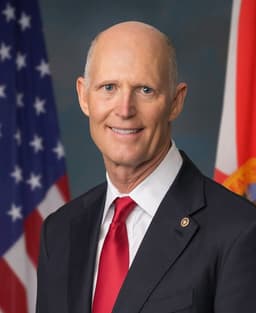
- Rick ScottSenator · FL · RepublicanTransactions76Reports filed11Last disclosedAug 13, 2026
- Lisa McClainRep. · MI-09 · RepublicanTransactions1434Reports filed9Last disclosedAug 5, 2026
- John FettermanSenator · PA · DemocratTransactions51Reports filed18Last disclosedSep 9, 2026
- John BoozmanSenator · AR · RepublicanTransactions394Reports filed48Last disclosedSep 11, 2026
- Byron DonaldsRep. · FL-19 · RepublicanTransactions160Reports filed14Last disclosedJul 15, 2026
- David H McCormickSenator · PA · RepublicanTransactions413Reports filed24Last disclosedAug 27, 2026










Most disclosed companies
The companies whose shares members disclosed trading in the last 90 days, confirmed ticker matches only. This counts transaction reports, not what anyone owns, and the amounts are sums of each filing's band minimum: at least that much was disclosed, because the form asks for a range and a range supports a floor, never an exact figure.
By members trading it
Latest disclosures
Loading disclosures…
How to read this
A disclosure date is not a transaction date. Members must report a covered transaction within 45 days of it happening, so the two columns routinely differ by weeks. Both are shown, and neither is merged into the other.
Amounts are ranges, and stay ranges. The form asks for a band, not a figure, so a report says something like $1,001 – $15,000 rather than what was actually spent. Materiality shows that band exactly as filed and will never convert it into a single number, because the midpoint of a range is a precision the filer never gave. The one total on this page, on the most-disclosed boards, is a sum of band minimums and says so: at least that much was disclosed, which is a bound the filings support rather than an estimate they don't.
A ticker links to a company only when it is certain. The symbol shown is the one the filer typed. It becomes a link when that symbol and the company name agree; where they do not, it is marked a probable match and left unlinked, because attaching a public official's trade to the wrong company is a worse error than leaving it unattached.
Some reports cannot be read automatically. About one in eight is filed on paper and published as a scan with no machine-readable text. Those are counted above and named beneath the table, with links to the source, rather than being left out silently. A few individual rows are also refused, where a filer typed an exact figure into a column that only accepts ranges.
The two chambers publish differently. The House files a PDF per report, some of them scans; the Senate publishes a table, so its reports are read in full. Senators also hold far more municipal bonds, treasuries and funds, and those have no company page to link to, so a smaller share of their transactions carries a ticker here. That is what they disclosed, not a gap.
Sources: the Clerk of the House financial disclosure archive and the Senate electronic financial disclosure system, both US Government works.